
Author name: Admin

Artificial intelligence digital brain concept illustrating the future of AI content marketing technology
Blog

Generative AI: Technology Behind AI Content Marketing in 2026

Introduction Over the few years making online content has changed a lot. We used to spend hours writing articles, making graphics or editing videos to create content. Most businesses had a team of writers, designers and editors to keep their content coming. They needed these teams to make sure they had content. Making content was a job that took a lot of people. However, it all changed and is much faster. AI content marketing took a huge role in the content creation process.  Minutes are all needed to complete tasks that took hours once. Generative Al, being one of the technologies leading this change. Generative Al is quickly becoming an important tool for marketers, businesses and creators, who need to produce content regularly. All tools can help turn ideas into finished content much more quickly. Writing blog posts, generating images, creating videos etc can be done using AI tools.  For example, many companies now use such tools to assist with blog writing, marketing, social media captions, graphics design and even voice generation. Because of this, generative Al has become more useful in digital marketing and online content production. How does generative Al work? At a basic level, it works by learning from large datasets. These datasets may contain millions of examples such as articles, images, videos and audio recordings. During training, the AI content marketing studies all these examples to understand how different types of content are created. Once the training process is over, the system starts to generate new content based on user instructions or prompts.  Several key technologies make this possible. Machine learning  Machine learning lets the computer identify patterns within a large amount of data. As the system starts to process more information, it becomes better at producing relevant and realistic content. Deep learning  Deep learning is a more advanced form of machine learning and it uses layered neural networks. This layered neural network helps the system understand complex patterns in language , images and sound. These networks let Artificial Intelligence systems make sophisticated content. Over the few years the way we make content online has changed a lot. Not ago making digital content meant spending hours writing articles, making graphics or editing videos. Most businesses needed teams of writers, designers and editors to keep their content going. Generative Artificial Intelligence is quickly becoming a tool for marketers, businesses and creators who need to make content regularly. Whether it is writing blog posts, making images or even making videos Artificial Intelligence tools can help turn ideas into something. Natural language processing (NLP)  Natural language processing enables AI systems to understand and generate human language. This technology allows the AI tools to create Blog posts, emails, product description and social media captions. Large language models  Large language models are trained using the massive collection of text from books, websites and articles. Because they have learned from so much written material, they can generate sentences that sound clear and natural. How generative Al is changing content creation? Generative Al is already transforming how businesses create digital content. Many companies now use AI content marketing tools to speed up their content production. One common use is writing blogs. Over the few years how we create online content has changed a lot. Not ago making digital content meant spending hours writing articles. It also meant designing graphics or editing videos. Most businesses used teams of writers, designers and editors. They needed them to keep their content coming.   Artificial Intelligence or AI content marketing has started to play a part in creating content. Many tasks that took hours can now be done in minutes. One of the technologies making this change is Generative AI. Generative AI is becoming a tool. It is useful for marketers, businesses and creators. They need to produce content Whether it’s writing blog posts or  generating images AI tools can help. They turn ideas into content. AI content marketing is helping with blog writing. It is also helping with creating videos. One common use is writing blogs. Over the past few years how we create online content has changed a lot. Not ago making digital content meant spending hours writing articles. It also meant designing graphics or editing videos. Most businesses used teams of writers, designers and editors. They needed them to keep their content coming. One of the technologies making this change is Generative AI. Generative AI is becoming a tool. It is useful for marketers, businesses and creators. They need to produce content. Whether it’s writing blog posts or generating images, AI content marketing tools can help. They turn ideas into content. Generative AI is helping with blog writing. It is also helping with creating videos. AI is also widely used in social media marketing. Since businesses need to publish content frequently across multiple platforms, these AI content marketing  tools quickly generate captions, hashtags and postideas , making it faster and easier to stay consistent online. Another area where generative Al makes an impact is graphics design. Designers often use AI-powered design tools that can create illustrations, marketing visuals and product images in seconds to explore creative ideas as well to speed up their workflow. AI content marketing is also being used in video and audio creation with some platforms generating voiceover, background music or short marketing videos. This can reduce both the production time and cost for business running digital campaigns. Benefits of generative Al for digital marketing  For companies that regularly produce digital content, generative Al offers several clear advantages. Faster content creation  One of the biggest benefits is speed. Marketers can generate blog drafts, product description or ad copy within minutes. This allows the businesses to publish more content in little time. Increased productivity  AI content marketing can handle tasks such as generating outlines, captions or simple design elements. This helps the marketers to focus more time on their strategy, creativity and planning. Reduced costs  Hiring writers, designers and editors for every project can be expensive. AI tools can support the content
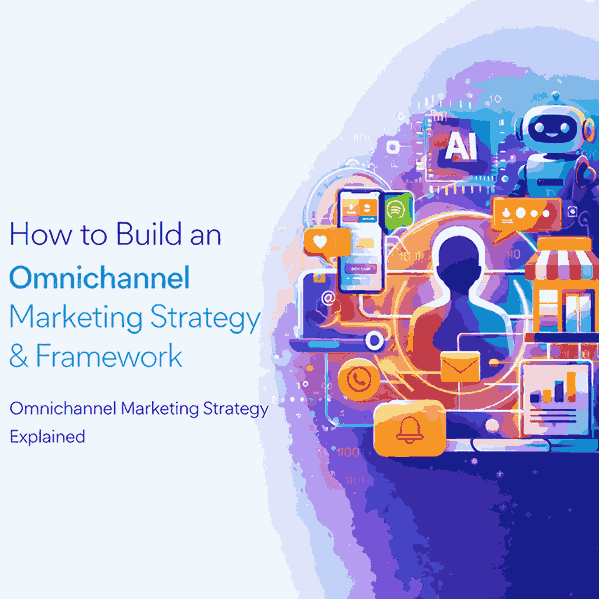

Visual of an omnichannel marketing strategy with AI, connected digital channels, customer journey, and data-driven marketing framework for 2026.
Blog

The complete guide to omnichannel  marketing in 2026

What is Omnichannel Marketing Strategy in 2026? An omnichannel marketing strategy is a customer centric approach that brings together all the different marketing and communications channels to create a consistent experience. This extends beyond websites, emails and social media in 2026. From AI chatbots and voice assistants to connected TVs, in-store experiences, AR/VR interfaces and new platforms. What sets an omnichannel marketing strategy apart from the traditional approach is continuity. Each interaction adds to the last. You know your customers, remember them and deliver relevancy to then wherever they might engage you. This is what consumers demand and judge brands by. The Shift from Channels to Journeys The former models were based on channels, social media strategy, email strategy, SEO strategy and offline strategy. Instead, this approach revolves around customer journeys. Customer journeys are not linear and predictable in 2026. A customer might stop, come back, move to a new device or change channels several times before finally committing. Instead of, ’Which channel should we focus on?’ marketers are now asking, ‘Where is the customer, and what do they need next?’ It is this attitude that determines a good omnichannel marketing strategy. Why Omnichannel Marketing Strategy Is Critical in 2026    It’s 2026 and customer expectations have been defined by speed, customization and convenience. Consumers expect brands to understand them within a personal context, respect their time and offer something of value from the start. This becomes possible with an omnichannel strategy. There are several reasons why omnichannel marketing is so important in 2026: Customer-Centricity: The Foundation of Omnichannel Marketing Strategy At the heart of every omnichannel marketing strategy is the customer. In 2026 customer centric marketing is not a catchword, it is an operational requirement. A customer centric omnichannel marketing strategy uses data responsibly to understand customer attitude preferences and intent. It focuses on solving problems rather than pushing promotions. By adding the customer at the center; an Omnichannel marketing strategy creates emotional connections that build trust and long term loyalty. Unified Data: The Engine Behind Omnichannel Marketing Strategy In the present scenario, successful brands commonly use customer data platforms  to unify online and offline interactions providing a single customer view. Like a retail brand might use a CDP to combine data from their website, mobile app, social media, and in store purchases, enabling custom built offers and seamless customer experiences.      A strong omnichannel marketing ensures that every team (marketing,sales,and customer support) accesses the same customer insights enabling smarter decisions and better experiences. And without unified data the omni channel strategy fails and leads to inconsistent experiences. Personalization at Scale in Omnichannel Marketing Strategy An omni channel marketing strategy uses AI and automation to deliver personalization at scale,which is the expectation in 2026. Examples:  A skillfully done omni channel marketing strategy balances the personalization with the privacy, thus ensuring the customer with a feeling of understanding and not watching.  The Role of AI and Automation in Omnichannel Marketing Strategy AI and automation together build a great omnichannel marketing strategy. AI(artificial intelligence) helps brands in predicting customer needs, optimizing time and select the best channel for engagement; while automation supports omnichannel strategy by enabling real time responses across various platforms. Chatbots,automated emails,push notifications and AI driven ads work together to maintain consistency. And that’s how the omni channel marketing in 2026 is inefficient and difficult to scale without AI. Incorporate Online and Offline Experiences Omni channel marketing has its capacity to bridge the gap between digital and physical experiences, which is a strongest advantage In 2026 customers expect – Omnichannel marketing removes the boundaries between online and offline creating a single brand experience. Omnichannel Marketing Strategy and Content Consistency Content plays a crucial role in omnichannel marketing . In 2026 consistency does not mean repeating  it means organizations adapt effectively. An omnichannel marketing  ensures that messaging, tone, visuals, and values remain regular across platforms while fitting to the context of each channel. This regularity strengthens brand identity and builds trust, a critical segment of long term success. Challenges in Omnichannel Marketing Strategy implementation Despite its benefits, implementing omnichannel marketing comes with challenges. Data silos remain a major impediment . When systems and teams operate independently, omnichannel marketing  becomes fragmented. Another challenge is organizational alignment. Omnichannel marketing  requires association across departments, which demands cultural change. Technology merging and data privacy regulations also add complexity. In 2026; brands must design omnichannel marketing  with ethics and acceptance in mind. Measuring Success in Omnichannel Marketing Strategy Measurement is essential to improve omnichannel marketing . The quality of the experience is important to measure an omnichannel marketing success rate.-Omnichannel Marketing Strategy and Trust in 2026 Since, customers are more aware of how their data is used, transparency becomes the trust element of successful marketing in 2026. And it shows responsible omnichannel marketing through respecting privacy, clear communication and delivering value in exchange for data. A brand that prioritises trust within their omni channel marketing, builds stronger and sustainable  relationships. Looking ahead,the future trends shaping the comprehensive omnichannel marketing approach indicate its continued evolution. In 2026 omnichannel marketing becomes more embracing, engaging and forward- looking. Why Omnichannel Marketing Strategy Is a Long Term Investment. An omnichannel marketing strategy is not a campaign but a long term investment and it requires time, technology and alignment. The rewards of an omni channel marketing strategy is significant. In a competitive digital environment, omnichannel marketing strategy is the difference between brands that survive and brands that lead. Conclusion: The Complete Guide to Omnichannel Marketing Strategy in 2026 As marketing begins a new era, omni channel  marketing strategy stands at the centre of meaningful customer engagement . It connects experience. In this new era, success comes to those brands that truly understand their customer, respect their journeys and deliver value consistently . Omni channel marketing enables this transformation. By embracing the integration, personalization and customer centric thinking , businesses can build omni channel marketing frameworks with resilience and are scalable and future ready.

Scroll to Top